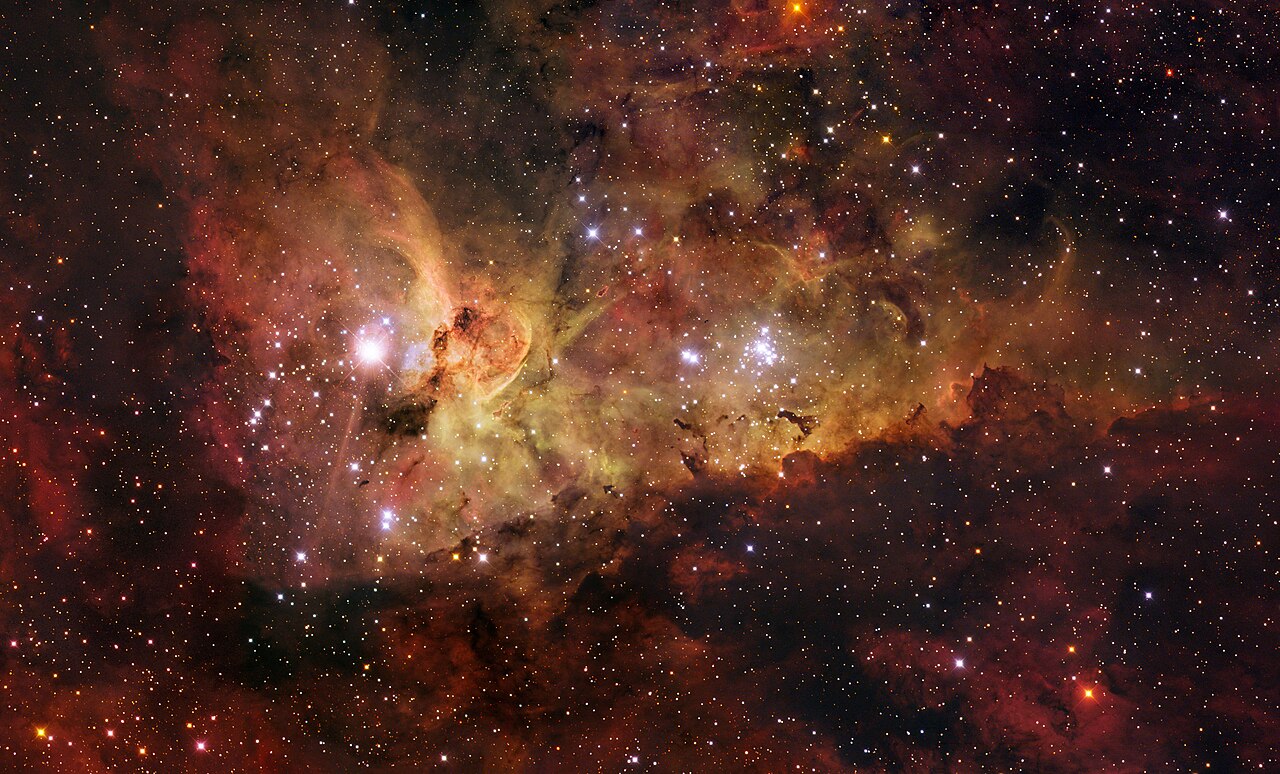
NASA's Hubble Space Telescope and the James Webb Space Telescope have jointly observed the Cat's Head Nebula, a star-forming region within the Carina Nebula. The nebula is approximately 7,500 light-years away from Earth, and the two telescopes offer complementary views of this shadowy form.
Hubble's visible-light view shows the Cat's Head Nebula as a dark, elongated dust pillar, while Webb's infrared-light imagery reveals many stars and other hidden details. The Cat's Head Nebula is a dynamic star-forming scene, where new stars are forming and will eventually disperse as they evolve.
The observations by Hubble and Webb provide valuable insights into the process of star formation, which is still not fully understood. The Cat's Head Nebula is a significant object of study, and the combined efforts of Hubble and Webb will help scientists better understand the mysteries of the universe.
Evidence lens
2 cited sources are linked to this briefing.