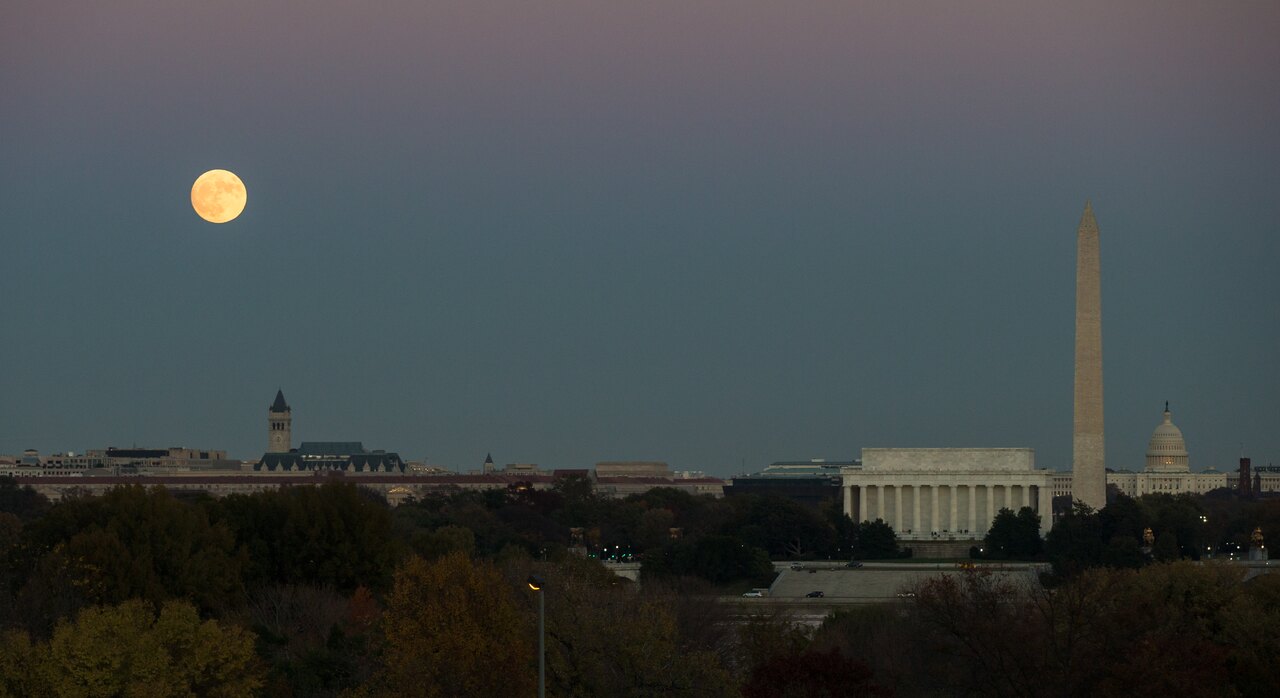

Start with a skyline
Choose a spot where a building, tree or ridge will lie beneath the rising Moon. While there is still some daylight, make a wide photograph that includes both. A recognisable foreground gives the viewer a sense of the Moon’s position even if it occupies only a small corner of the frame.
Then try for surface detail
Steady the phone against a support, switch off the flash and touch the lunar disc on screen to focus. Lower the camera exposure until the bright disc shows patches of grey. Take a second frame with the self-timer. Compare the two: a darker foreground may be the price of keeping detail on the Moon.
Know what the zoom is doing
If the phone offers a true telephoto lens, try a frame with it. Digital zoom simply crops the image, so keep a wide original you can crop later. For another night’s experiment, Australian astrophotographer Alex Cherney recommends trying a crescent or quarter Moon, when shadows at the light–dark boundary give the craters definition.